
Conversion Infrastructure
Websites, landing pages, forms, and conversion paths built to turn attention into measurable action.
DOES builds the web layer of your lifecycle marketing system, so traffic has a clear path to become leads, subscribers, customers, and long-term relationships.
Websites Built to Convert, Not Just Exist
A website should do more than look professional. It should clarify your offer, guide the visitor, capture demand, and connect directly to the rest of your marketing system.
DOES builds conversion infrastructure that supports the full customer journey, including page structure, messaging, user experience, lead capture, analytics, SEO foundations, and follow-up pathways.
Structure
Clear page architecture that helps visitors understand where they are, what you offer, and what to do next.
Messaging
Conversion-focused copy that connects your offer to customer problems, intent, and decision-making.
Performance
A fast, stable, mobile-ready foundation built to support traffic, usability, and search visibility.
Lead Capture
Forms, opt-ins, landing pages, and offers that convert attention into owned audience relationships.
Analytics Readiness
Measurement foundations that help you understand traffic, behavior, submissions, and conversion paths.
Ownership
A website and asset foundation your business controls, without being trapped inside someone else’s system.
The goal is not just a better website. The goal is a web foundation that makes your marketing activity more measurable, owned, and easier to improve over time.
How Conversion Infrastructure Works
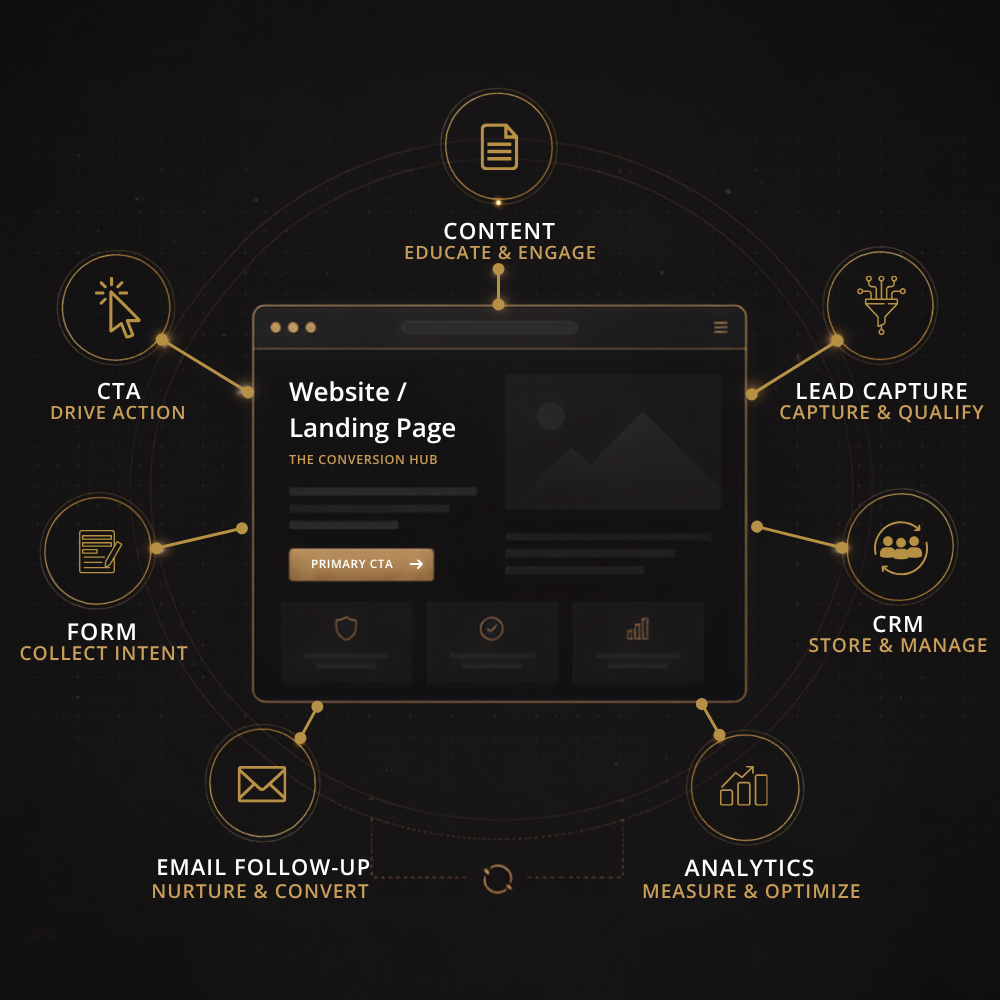
Your website is often the first owned environment where attention becomes action. When it is built correctly, it does not sit apart from your marketing. It connects directly to your content, SEO, lead capture, CRM, email, reporting, and follow-up strategy.
DOES builds websites and landing experiences with the larger lifecycle system in mind, so each page has a role, each form has a purpose, and each conversion path supports the next stage of the customer journey.
Conversion Infrastructure FAQs
Frequently asked questions about websites, landing pages, lead capture, analytics, and conversion infrastructure.
Conversion infrastructure is the web layer of your lifecycle marketing system. It includes the website, landing pages, forms, calls to action, lead capture paths, analytics, and follow-up connections that help turn attention into measurable action.
The goal is not just to have a professional-looking website. The goal is to create a web foundation that helps visitors understand your value, take the next step, and move into the rest of your marketing system.
Not exactly. Website design is one part of conversion infrastructure, but it is not the whole system.
Conversion infrastructure includes design, structure, messaging, user experience, lead capture, SEO foundations, analytics readiness, and integration with email, CRM, and follow-up workflows. It treats the website as a business system, not just a visual asset.
Yes. DOES can work with existing websites when the foundation is usable and worth improving.
The first step is reviewing the current site structure, messaging, user experience, conversion paths, technical setup, and marketing integrations. From there, DOES can determine whether the site should be optimized, partially rebuilt, or fully replaced.
Not always. Some websites only need better messaging, cleaner structure, stronger lead capture, technical improvements, or better integration with email and CRM.
A full rebuild is only recommended when the current site is limiting performance, difficult to maintain, poorly structured, technically weak, or no longer aligned with the business.
DOES primarily works with WordPress-based websites and the tools commonly connected to WordPress, including form builders, analytics platforms, SEO tools, email service providers, CRM systems, and automation tools.
If your business already uses a specific platform or stack, DOES can review the setup and determine whether it can be improved, connected, or should be migrated.
Yes. Mobile usability is a core part of conversion infrastructure.
A website needs to be readable, fast, easy to navigate, and conversion-ready across desktop, tablet, and mobile. DOES builds with responsive structure, clear page flow, mobile-friendly forms, and user experience in mind.
Yes. Lead capture and follow-up are central to the conversion infrastructure approach.
This can include landing pages, opt-in forms, downloadable resources, newsletter signups, CRM tagging, welcome sequences, nurture emails, and other follow-up paths that help turn visitor interest into an owned audience relationship.
Yes. Analytics and tracking can be included so your business can understand how visitors find the site, what pages they engage with, where conversions happen, and where the system can improve.
Depending on the project, this may include GA4, event tracking, form submission tracking, conversion goals, search visibility tools, and reporting foundations.
Yes. Websites and assets created for your business are yours to keep.
DOES is focused on building owned marketing infrastructure, which means your business should have control over the site, content, lead capture assets, and related materials created as part of the engagement.
Build the Marketing System Behind Your Next Stage of Growth
If your marketing activity feels disconnected, underused, or difficult to measure, DOES can help you connect the pieces into one lifecycle system built for acquisition, conversion, retention, and long-term customer value.