
Content-Led Acquisition
Strategic content systems that build authority, answer customer demand, and bring qualified traffic into your lifecycle marketing system.
DOES develops content that supports search visibility, trust, lead capture, email follow-up, and long-term customer acquisition.
Content That Builds Demand Over Time
Content should do more than fill a blog. It should help the right audience find you, understand your expertise, and take the next step in the customer journey.
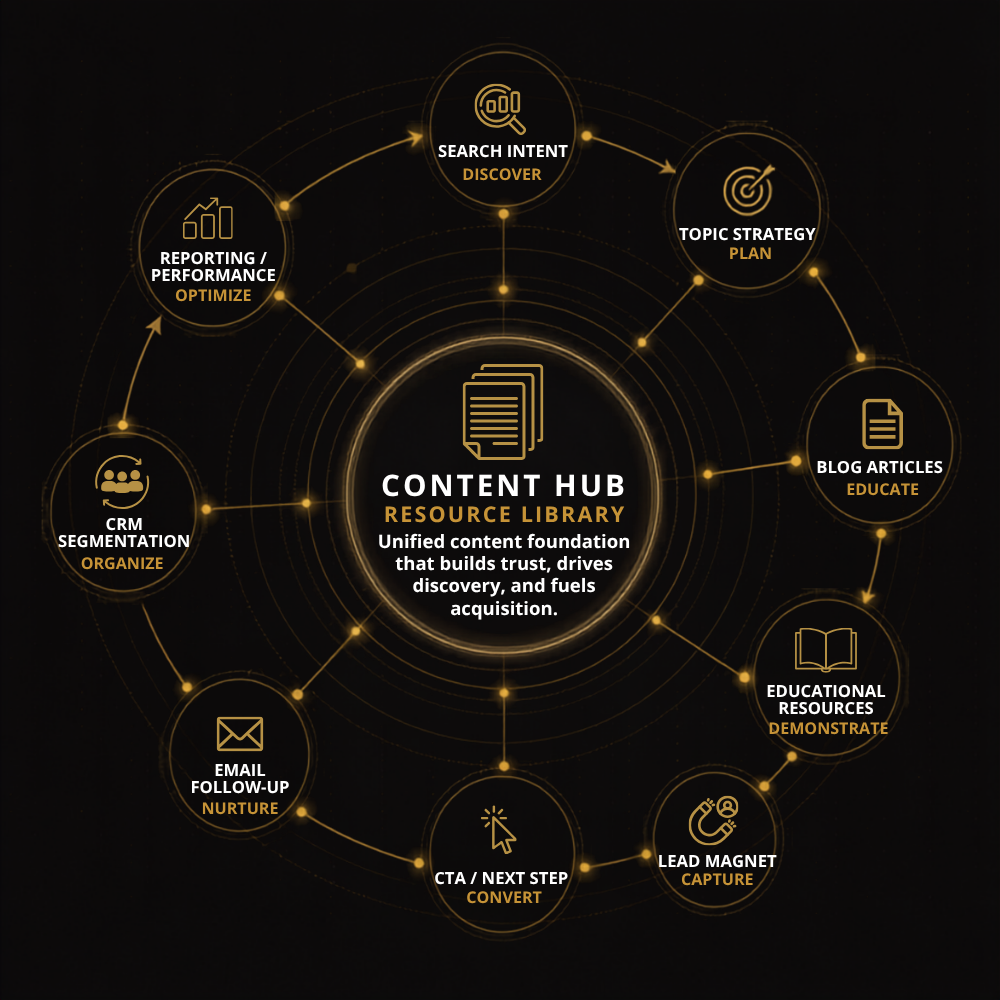
DOES builds content-led acquisition systems that connect topic strategy, search intent, educational resources, lead magnets, and conversion paths into one growth layer.
Strategy
Topic and content planning aligned with customer questions, search demand, and business goals.
Authority
Educational content that helps your business demonstrate expertise and build trust before the first conversation.
Search Alignment
Content structured around real search intent, internal linking, metadata, and discoverability.

Conversion Support
Content connected to lead magnets, CTAs, forms, email follow-up, and next-step pathways.
Production
Research, writing, formatting, editing, publishing, and optimization support to keep the system moving.
Compounding Value
Content assets built to create long-term visibility, reusable education, and ongoing acquisition value.
The goal is not random publishing. The goal is a content foundation that compounds visibility, builds trust, and supports measurable acquisition over time.
How Content-Led Acquisition Works
Content is often the first layer of trust in a lifecycle marketing system. It helps people discover your business, understand their problem, evaluate your expertise, and move toward a relationship with your brand.
When content is built correctly, it does not sit apart from the rest of your marketing. It supports SEO, lead capture, email nurture, CRM segmentation, sales conversations, and long-term customer education.
DOES builds content systems with the larger customer journey in mind, so each article, resource, and lead magnet has a clear role in acquisition, conversion, and follow-up.
Content-Led Acquisition FAQs
Frequently asked questions about content strategy, search-aligned publishing, lead magnet support, and content systems built for acquisition.
Content-led acquisition is the use of strategic content to attract qualified traffic, build trust, answer customer questions, and move people into the next stage of your marketing system.
Instead of publishing content just to “have a blog,” content-led acquisition connects topics, search intent, educational resources, lead capture, email follow-up, and performance measurement into one acquisition layer.
Regular blogging often focuses on publishing posts. Content-led acquisition focuses on building a system.
That means each article or resource should have a clear purpose: attract the right audience, support search visibility, educate the reader, build trust, create a next step, or connect to a lead capture and follow-up path.
DOES can support blog articles, educational resource pages, service pages, lead magnets, guides, checklists, newsletter content, landing page copy, and supporting campaign content.
The type of content depends on the business, audience, offer, search opportunity, and where the content fits inside the larger lifecycle marketing system.
Yes. Topic and keyword strategy are part of the content-led acquisition process.
DOES reviews customer intent, search opportunities, business priorities, service areas, and content gaps to help determine what should be created, how it should be structured, and how each piece should support acquisition and conversion.
Yes. Content is often one of the strongest foundations for lead generation when it is connected to a clear next step.
Blog articles, educational resources, and topic clusters can support lead magnets, opt-in forms, newsletter signups, consultation requests, email nurture sequences, and CRM segmentation.
Publishing frequency depends on your goals, resources, competition, and how quickly you want to build authority around specific topics.
For many businesses, consistency matters more than volume. A realistic publishing plan that can be maintained, optimized, and connected to the broader system is usually more valuable than publishing aggressively without a clear strategy.
That depends on the workflow you prefer and the level of review your business requires.
Many clients review and approve content before publishing, especially when accuracy, brand voice, legal considerations, or industry-specific expertise matter. Over time, the process can become more efficient as the strategy, voice, and editorial standards become clearer.
Yes. Existing content can often be improved before creating more.
DOES can review current articles, pages, metadata, internal links, calls to action, structure, search alignment, and conversion paths to identify what should be updated, expanded, consolidated, repurposed, or connected to lead capture and follow-up.
DOES may use AI as part of the research, planning, outlining, drafting, editing, and quality control process, but AI does not replace strategy, human review, brand judgment, or subject-matter accuracy.
The goal is not to publish generic AI content. The goal is to create useful, accurate, brand-aligned content that supports search visibility, trust, and the larger lifecycle marketing system.
Content performance can be measured through search visibility, organic traffic, engagement, rankings, internal link movement, lead capture, form submissions, email signups, assisted conversions, and downstream customer actions.
DOES looks at how content contributes to the larger system, not just whether a page received views. The goal is to understand what content attracts the right audience, supports conversion, and creates long-term acquisition value.
Build the Marketing System Behind Your Next Stage of Growth
If your marketing activity feels disconnected, underused, or difficult to measure, DOES can help you connect the pieces into one lifecycle system built for acquisition, conversion, retention, and long-term customer value.